
The ARC Framework: Why Some Startup Employees Become Indispensable (And Most Burn Out)
Jan 27, 2026Your brain treats startup chaos like a threat.
That's not a metaphor. Neuroscience research shows your brain processes uncertainty similarly to how it processes danger, triggering sustained activity in the amygdala and anxiety-like responses.¹ Your reptilian brain, the oldest part of your mind, craves predictability, safety, routine.
Startups offer the opposite.
After nearly 20 years watching people thrive and burn out in startups, I noticed a pattern. The difference wasn't talent. It wasn't experience. It was three specific things working together.
I call it ARC.
What Is the ARC Framework?
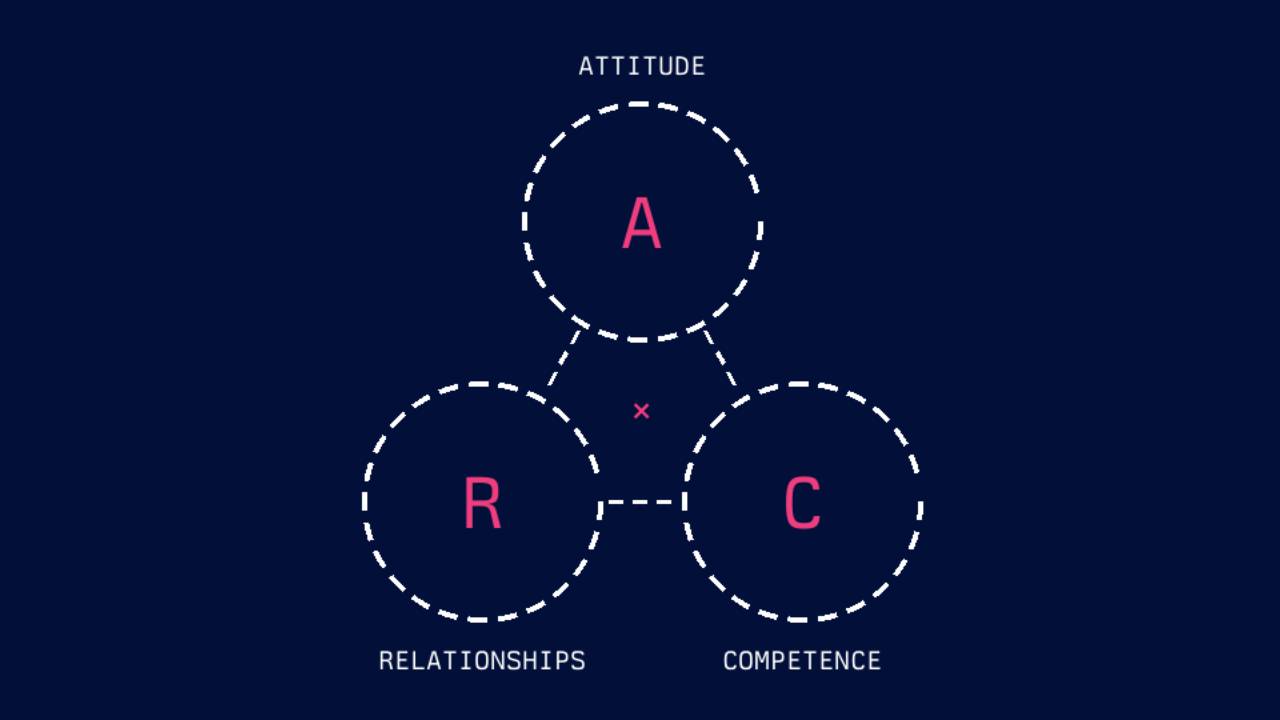
ARC stands for:
- Attitude — Your response to chaos
- Relationships — Trust at startup speed
- Competence — Execution without burning out
These aren't three separate skills. They multiply each other. Your attitude attracts relationships. Relationships accelerate competence. Competence reinforces attitude.
Miss one, you're replaceable. Get all three working together, and you become the person they can't afford to lose.
This isn't motivation. It's mechanism. Built on 100+ research citations from neuroscience, behavioral science, and organizational psychology.
Why Your Reptilian Brain Fights You
Neuroscientist Paul MacLean's research on the triune brain identified that our oldest brain structures crave predictability, safety, resources, routine, and hierarchy.²
For 200,000 years, humans who had these things survived. Those who didn't, died.
Now look at startups:
- Predictability? Your product might pivot tomorrow.
- Safety? You might run out of money next month.
- Resources? Salary could be late, equity worthless.
- Routine? Every day is different.
- Hierarchy? Almost non-existent.
Startups are literally designed to trigger every alarm in your reptilian brain. Research shows your brain treats uncertain situations as threats, activating the amygdala and triggering anxiety responses.¹
Many people can't handle this. Their reptilian brain wins. They retreat to safety.
But some people learn to feel the discomfort and act anyway. That's ARC.
A: Attitude — Not Positivity. Response.
I was once part of a team flying to close a make-or-break deal. Four months of preparation. Everything riding on this meeting.
We get to the airport. Check in. Get through security. Ready to board.
Flight cancelled. Not delayed. Cancelled.
One guy was almost in tears. Another was screaming at airline staff. My designer was frantically searching for private jets we couldn't afford.
I said: "Imagine you've planned the perfect holiday. A whole year of planning. You get to the airport. Someone tells you to pile up your luggage, set it on fire, and walk away. In startups, you need to be able to do exactly that with almost no emotion."
They looked at me like I was insane.
But that deal we were flying to? The company moved away from the idea three weeks later anyway. The team members who couldn't handle the cancelled flight? Some quit in the coming months.
That's attitude. Not the absence of fear, but action despite fear.
The 4 Components of Startup Attitude
1. Cultivating Optimism
Research shows optimism isn't fixed. Neuroplasticity studies demonstrate your brain can develop new neural pathways throughout life.³
Martin Seligman's research identified three thinking patterns you can change:⁴
- Personalization: "That approach didn't work, I'll try another" vs. "I failed because I'm incompetent"
- Permanence: "I'm still learning this" vs. "I'll always struggle with this"
- Pervasiveness: "This one area needs work" vs. "I'm bad at everything"
Optimists exceed predictions of aptitude tests, recover faster from setbacks, and are more likely to be promoted.⁵
2. Fluid Mindset
Carol Dweck's research shows the difference between fixed and growth orientations.⁶ But startups require something beyond growth mindset: cognitive flexibility.⁷
Monday you're a developer. Tuesday you're in sales calls. Wednesday you're fixing the coffee machine. Thursday you're presenting to investors.
Your title is a suggestion. Your role is whatever needs doing.
3. Comfortable with Discomfort
Research on distress tolerance shows people with higher tolerance perform better under pressure.⁸
You can't eliminate fear responses. They're hardwired.⁹ You just get better at translating discomfort into curiosity:
- "Runway drops below 6 months" becomes "How do we extend it?"
- "Key person quits" becomes "Who can step up?"
- "Product launch fails" becomes "What did we learn?"
4. Burning Luggage Without Drama
The ability to kill what you've built without mourning it. This goes against the sunk cost fallacy¹⁰ and psychological ownership, which makes us emotionally attached to things we create.¹¹
The luggage is already on fire. The question is: are you going to stand there crying about it, or take the lessons and build something better?
The Secret Ingredient: Agency
Research on locus of control shows people who believe they can influence outcomes outperform those who believe outcomes are determined by external forces.¹²
Low agency sounds like: "Nobody told me what to do." "That's not my department." "I'm waiting for approval."
High agency sounds like: "I figured it out." "I found a way." "I made the call and here's why."
Studies show employees who take initiative without being asked are rated significantly more valuable by managers.¹³
R: Relationships — Trust at Startup Speed
The need to belong is a fundamental human motivation, as essential as food and water.¹⁴
In startups, you have weeks to create what larger organizations build over years.
I've watched hundreds of people in startups. The ones everyone wants on their team, the ones who survive every layoff, they interact differently. They're not necessarily the most talented. But they're always present, always responsive.
The 4 Pillars of Startup Relationships
1. Radical Responsiveness
In startups where teams are small, even a simple question might be blocking someone's entire day.
When you're on, be fully on:
- "Got it, will do" (5 seconds, they stop worrying)
- "Don't know, let me find out" (8 seconds, shows you care)
- "Can't now, will tackle after 3pm" (10 seconds, they can plan)
Research shows response time is the strongest predictor of perceived reliability.¹⁵
2. Autonomous Support
Help before anyone knows they need it. Every act of autonomous support creates social capital,¹⁶ the invisible currency of trust.
See a broken link? Fix it. Notice someone drowning? Throw them a rope. Don't wait for permission.
3. Transparent Honesty
This creates what Harvard researchers call psychological safety: the belief you won't be punished for mistakes.¹⁷
When you say "I don't know but I'll figure it out," people trust you more, not less. Now they know you tell them the truth.
4. Digital Body Language
In digital startups, emojis become your body language. They replace the nods and smiles that build connection in person.
Research shows your sense of connection can shift multiple times per day.¹⁸ Every message either builds or erodes belonging.
C: Competence — Execution Without Destroying Yourself
Early in my career, I thought I was bulletproof.
Twenty-hour days? No problem. Weekend emails? Standard. Sleep? That's what the commute is for.
Then one day, chest pains. Real, crushing, can't-breathe chest pains. The doctor sent me straight to the hospital. They ran every test. Found nothing.
A nurse kneels next to my bed and asks: "Is your job stressful?"
"Yeah, I guess so."
He smiled. "That's all it is. It's stress."
I had no idea stress could cause physical pain. That day changed how I think about competence.
The 3 Elements of Startup Competence
1. Contextual Awareness
Research on situated cognition shows knowledge isn't abstract. It's tied to the environment where it's used.¹⁹
Your skills are only valuable if they solve THIS company's problems right now. Your first month isn't about showing what you know. It's about learning what matters HERE.
2. Evolutionary Learning
The people who thrive have intellectual humility: the recognition that your knowledge is fallible.²⁰ Studies show these people learn faster and make better decisions.
Research shows learning with immediate application significantly improves retention.²¹ Stop collecting certificates. Start solving immediate problems.
3. Sustainable Energy
Research shows chronic stress causes rapid loss of prefrontal cortex function, impairing decision-making.²² You literally become worse at your job when you don't manage yourself.
Here's what's fascinating: people who view stress as enhancing perform better than those who view it as debilitating.²³ Same physiological response, different outcome.
Competence without sustainability is just delayed failure.
How ARC Works as a System
The people who get destroyed by startups often have one or two elements. Great skills but wrong mindset. Positive attitude but no network. Strong relationships but can't deliver.
When all three work together:
- Attitude makes people want to work with you
- Relationships make people think of you first
- Competence makes people depend on you
Stack all three for 18-36 months and you become professionally unfireable. Not at one company. From the entire ecosystem.
The company might fail. The product might disappear. But your ARC? That's yours forever.
Start Building Your ARC Today
For Attitude:
- When plans change, write down what you'll learn from the new direction
- When you feel panic, name it: "That's my reptilian brain doing what it does"
- Ship something imperfect rather than nothing at all
For Relationships:
- Respond to messages quickly, even just "seen this, will respond shortly"
- Help without being asked
- Admit something you don't know
For Competence:
- Your first month, be an anthropologist. Learn what matters HERE.
- Stop collecting certificates. Start solving immediate problems.
- Protect your energy. No hospital beds at 28.
The Bottom Line
The reptilian brain craves safety. Startups are chaos. ARC is how you dance with both.
You don't need to be a founder to win at startups. You just need to know the rules.
Enter Startup: The Employee's Guide to Getting Hired, Shipping Fast & Thriving When Everything's on Fire launches early 2026. The book includes 100+ research citations backing the ARC Framework.
Sign up for first access and get the free Startup Survival Primer: 7 rules nobody teaches you.
Frequently Asked Questions
What is the ARC Framework?
ARC is a research-backed system for thriving as a startup employee. It stands for Attitude (your response to chaos), Relationships (trust at startup speed), and Competence (execution without burning out). The three elements multiply each other: attitude attracts relationships, relationships accelerate competence, competence reinforces attitude.
Why do most startup employees burn out?
Your brain is wired against startups. Neuroscience research shows your reptilian brain craves predictability, safety, and routine. Startups offer constant change, financial uncertainty, and chaos. Without understanding this biological reality and learning to work with it (not against it), most people either burn out or retreat to "safer" environments.
How is ARC different from other career frameworks?
Most career advice is built for corporate environments with clear hierarchies, defined roles, and gradual progression. ARC is specifically designed for startup chaos where everything changes weekly, you might get fired after your best work, and there's no playbook. It's backed by 100+ research citations from neuroscience and behavioral science.
Can I develop ARC if I'm new to startups?
Yes. Research on neuroplasticity shows the brain can develop new neural pathways throughout life. Optimism is trainable. Stress response is reframable. Trust-building is a skill. The key is developing all three elements together, not just one or two.
How long does it take to build ARC?
You can start building ARC immediately with small daily practices. Most people see significant compound effects after 18-36 months of consistent application. The skills transfer between companies and compound over your entire career.
Where can I learn more about ARC?
You can learn more here where Greg talks in more detail about the framework.
References
-
Herry, C., et al. (2007). Processing of temporal unpredictability in human and animal amygdala. Journal of Neuroscience, 27(22), 5958-5966. https://www.jneurosci.org/content/27/22/5958
-
MacLean, P. D. (1990). The triune brain in evolution: Role in paleocerebral functions. Plenum Press.
-
Seligman, M. E. P., et al. (2005). Positive psychology progress: Empirical validation of interventions. American Psychologist, 60(5), 410-421. https://pubmed.ncbi.nlm.nih.gov/16045394/
-
Seligman, M. E. P. (2000). Optimism, pessimism, and mortality. Mayo Clinic Proceedings, 75(2), 133-134. https://pubmed.ncbi.nlm.nih.gov/10685471/
-
Seligman, M. E. P. (1991). Learned optimism: How to change your mind and your life. Vintage Books.
-
Dweck, C. (2006). Mindset: The new psychology of success. Random House.
-
Diamond, A. (2013). Executive functions. Annual Review of Psychology, 64, 135-168. https://pubmed.ncbi.nlm.nih.gov/23020641/
-
Leyro, T. M., Zvolensky, M. J., & Bernstein, A. (2010). Distress tolerance and psychopathological symptoms and disorders. Psychological Bulletin, 136(4), 576-600. https://pubmed.ncbi.nlm.nih.gov/20528642/
-
Milad, M. R., & Quirk, G. J. (2012). Fear extinction as a model for translational neuroscience. Annual Review of Psychology, 63, 129-151. https://pubmed.ncbi.nlm.nih.gov/22129457/
-
Arkes, H. R., & Blumer, C. (1985). The psychology of sunk cost. Organizational Behavior and Human Decision Processes, 35(1), 124-140. https://www.sciencedirect.com/science/article/abs/pii/0749597885900494
-
Pierce, J. L., Kostova, T., & Dirks, K. T. (2003). The state of psychological ownership. Review of General Psychology, 7(1), 84-107. https://journals.sagepub.com/doi/10.1037/1089-2680.7.1.84
-
Rotter, J. B. (1966). Generalized expectancies for internal versus external control of reinforcement. Psychological Monographs, 80(1), 1-28. https://psycnet.apa.org/record/1966-35015-001
-
Grant, A. M., & Ashford, S. J. (2008). The dynamics of proactivity at work. Research in Organizational Behavior, 28, 3-34. https://www.sciencedirect.com/science/article/abs/pii/S0191308508000038
-
Baumeister, R. F., & Leary, M. R. (1995). The need to belong: Desire for interpersonal attachments as a fundamental human motivation. Psychological Bulletin, 117(3), 497-529. https://pubmed.ncbi.nlm.nih.gov/7777651/
-
Kalman, Y. M., & Rafaeli, S. (2011). Online pauses and silence: Chronemic expectancy violations in written computer-mediated communication. Communication Research, 38(1), 54-69. https://journals.sagepub.com/doi/10.1177/0093650210362684
-
Helliwell, J. F., et al. (2017). Social Capital and Prosocial Behaviour as Sources of Well-Being. NBER Working Paper No. 23761. https://www.nber.org/papers/w23761
-
Edmondson, A. (1999). Psychological safety and learning behavior in work teams. Administrative Science Quarterly, 44(2), 350-383. https://journals.aom.org/doi/10.5465/asq.1999.0009
-
Allen, K. A., et al. (2021). The need to belong: A deep dive into the origins, implications, and future of a foundational construct. Educational Psychology Review, 34(2), 1133-1156. https://link.springer.com/article/10.1007/s10648-021-09633-6
-
Brown, J. S., Collins, A., & Duguid, P. (1989). Situated cognition and the culture of learning. Educational Researcher, 18(1), 32-42. https://journals.sagepub.com/doi/10.3102/0013189X018001032
-
Leary, M. R., et al. (2017). Cognitive and interpersonal features of intellectual humility. Personality and Social Psychology Bulletin, 43(6), 793-813. https://journals.sagepub.com/doi/10.1177/0146167217697695
-
Baldwin, T. T., & Ford, J. K. (1988). Transfer of training: A review and directions for future research. Personnel Psychology, 41(1), 63-105. https://onlinelibrary.wiley.com/doi/10.1111/j.1744-6570.1988.tb00632.x
-
Arnsten, A. F. (2009). Stress signalling pathways that impair prefrontal cortex structure and function. Nature Reviews Neuroscience, 10(6), 410-422. https://www.nature.com/articles/nrn2648
-
Crum, A. J., Salovey, P., & Achor, S. (2013). Rethinking stress: The role of mindsets in determining the stress response. Journal of Personality and Social Psychology, 104(4), 716-733. https://pubmed.ncbi.nlm.nih.gov/23566053/